Selenium deficiency symptoms are possible, but they are quite vague and overlap with thyroid disease, iron deficiency, stress, poor sleep, and other health problems.
This article will explain the signs with the strongest evidence, who is most at risk, and how to restore selenium without accidentally taking too much.
At a Glance
Selenium deficiency is uncommon in healthy people who eat a balanced diet. However, it can occur with kidney dialysis, poor absorption, long-term intravenous feeding, HIV, and some diets that are based on foods grown in selenium-poor soil.
Symptoms alone cannot confirm low selenium. Blood tests and professional care are essential because excessive selenium intake can also cause fatigue, hair loss, and abnormal nails.
Selenium’s Physical Properties and Role in Human Health
Selenium is a naturally occurring trace element whose physical properties place it among the metalloids. However, its nutritional value comes from the way the human body incorporates it into proteins.
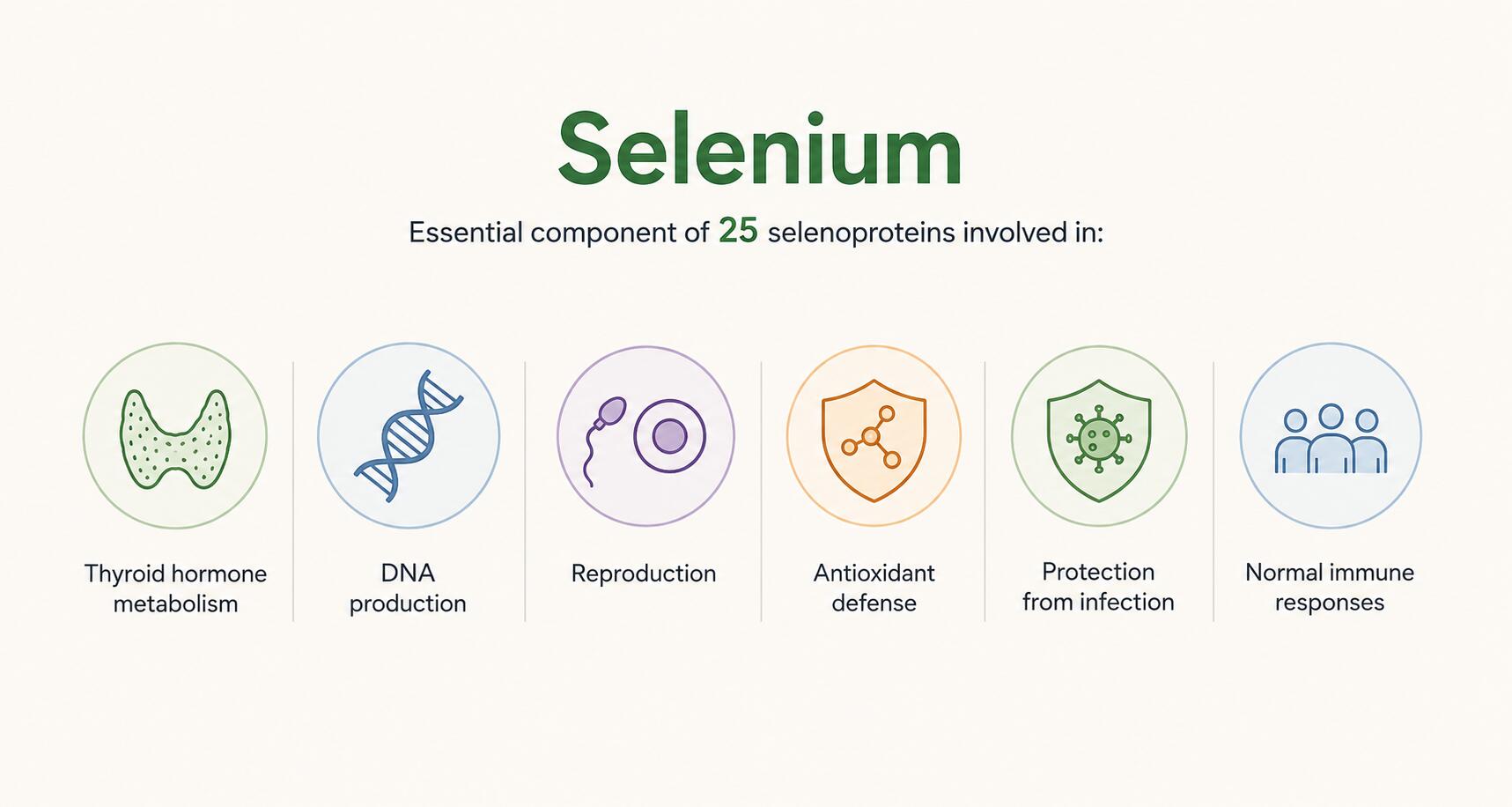
According to the NIH Office of Dietary Supplements, selenium is an essential component of 25 known selenoproteins. These proteins are involved in:
- Thyroid hormone metabolism
- DNA production
- Reproduction
- Antioxidant defense
- Protection from infection
- Normal immune responses
Additionally, several antioxidant enzymes (e.g., glutathione peroxidases, thioredoxin reductases) require selenium. These enzymes neutralize oxidative stress, which can be detrimental for your tissues.
The thyroid gland also contains high selenium concentrations. More specifically, selenium-dependent enzymes help convert the thyroid hormone thyroxine (T4) into the more active form triiodothyronine (T3). For this reason, you may come across selenium being discussed whenever thyroid health is brought up.
As we mentioned above, selenium occurs naturally in food in several organic forms, especially selenomethionine and selenocysteine. Dietary supplements may contain these forms or inorganic selenium compounds such as sodium selenite and sodium selenate.
Elemental selenium and selenium dioxide have industrial and laboratory uses, but they are not normal food-based supplement ingredients. The chemical form is important because different selenium compounds are absorbed and metabolized differently.
Selenium Deficiency Symptoms
The tricky part about isolated selenium deficiency is that it doesn’t have clear symptoms that are easily recognizable.
Fatigue, muscle weakness, hair changes, and poor concentration are frequently reported as signs of low selenium. However, these complaints are highly nonspecific as they can be signs of iron deficiency, vitamin B12 deficiency, an underactive thyroid, autoimmune disease, infection, medication, and chronic stress.
When selenium deficiency is significant, we are likely to witness symptoms that affect the muscles, joints, heart, thyroid gland, and the immune system.
| Symptom | Link to selenium deficiency |
|---|---|
| Muscle weakness, pain, and tenderness | Reported in people who receive long-term intravenous nutrition without enough selenium. |
| Fatigue or easily fatigued during exercise | Possible but extremely non-specific. |
| Hypothyroidism symptoms | Deficiency may worsen the effects of iodine deficiency and interfere with thyroid hormone metabolism. |
| Frequent infections | Selenium supports immune cells, but repeated infections do not prove deficiency. |
| Hair loss and brittle nails | Sometimes associated with low selenium. Interestingly, they can also occur as signs of too much selenium. |
| Male fertility issues | Low selenium status may affect sperm quality. However, infertility has many other causes. |
| Heart muscle weakness | This is seen in severe endemic deficiency. |
| Joint and bone abnormalities | Associated with Kashin-Beck disease in selenium-poor regions. |
The Merck Manual’s clinical review describes muscle pain and tenderness in people who developed deficiency during long-term total parenteral nutrition. It also notes that deficiency can work together with iodine deficiency to contribute to goiter and hypothyroidism.
Hair loss, thin hair, white nail spots, brittle nails, brain fog, and low mood are also possible. However, they should not be treated as proof that selenium levels are low. In fact, hair loss and nail abnormalities are also possible symptoms of selenium toxicity.
Severe Selenium Deficiency
Severe selenium deficiency is very rare. However, two diseases are historically connected with regions where dietary selenium is extremely low.
Keshan disease is a form of cardiomyopathy, which is a disease that affects the heart muscle, and was originally identified in China. This disease causes an enlarged heart, arrhythmias, breathlessness, heart failure, and poor cardiovascular health.
Selenium deficiency is an important aspect in Keshan disease. However, it may not be the only cause. Infection and other nutritional factors can also be contributing factors.
The second disease is Kashin-Beck disease, which is a chronic disorder that affects cartilage, bones, and joints. It mainly occurs in children who live in certain low-selenium regions of China and Siberia. The condition may cause joint pain, restricted movement, shortened fingers or toes, and impaired growth.
The NIH consumer guidance states that Keshan disease and Kashin-Beck disease are major consequences of severe deficiency. These conditions are not usual explanations for everyday fatigue in otherwise healthy adults.
Who Is at Higher Risk of Selenium Deficiency?
Most people who eat a varied diet are generally safe from selenium deficiency. The risk increases when your intake is low, you have poor absorption, and selenium is lost during medical treatment.
People at higher risk include those who:
- Receive kidney dialysis.
- Live with HIV.
- Receive long-term parenteral nutrition.
- Have severe malabsorption or extensive bowel surgery.
- Whose diets rely heavily on crops grown in selenium-poor soil.
- With extremely restricted diets.
- With chronic digestive diseases that reduce nutrient absorption.
Kidney failure does not automatically mean that a person is selenium deficient. However, dialysis may remove some selenium from the blood, and people who undergo dialysis may also have restricted diets, inflammation, and reduced intake.
The selenium content of plant foods is highly dependent on local soil. The same type of grain, bean, and vegetable may contain very different levels of selenium based on where it was grown.
Animal foods are usually more predictable because animals regulate tissue concentrations and their feed is supplemented. Therefore, seafood, meat, poultry, eggs, dairy foods, and organ meats are important dietary sources.
Nutriest explains the broader nutrient profile of liver, kidney, and heart in its guide to nutrients in organ meats and their cellular function.
Selenium Deficiency and Autoimmune Thyroid Diseases
Selenium plays an indispensable biological role in thyroid function. The important thing to understand here is that not every person with thyroid disease needs to take selenium supplements.
Low selenium can worsen iodine deficiency because both nutrients are necessary for normal thyroid hormone production and metabolism. Therefore, a person who is deficient in both nutrients may face a higher risk of goiter or hypothyroidism.
Researchers have also studied selenium supplementation in autoimmune thyroid diseases. More specifically, they focused on chronic autoimmune thyroiditis and Hashimoto’s disease.
A 2024 systematic review and meta-analysis found that selenium supplementation reduced thyroid-stimulating hormone in some people with Hashimoto’s thyroiditis who were not taking thyroid hormone replacement. It also reduced thyroid peroxidase antibodies and some markers of oxidative stress.
Keep in mind that reduced antibody levels will not necessarily translate to improved symptoms or requiring less medication.
As a result, selenium should not be considered a replacement for levothyroxine, iodine assessment, regular blood testing, and standard treatment for thyroid disease.
How Is Selenium Deficiency Diagnosed?
A healthcare professional will start investigating your diet, symptoms, medical history, medications, digestive health, and known risk factors.
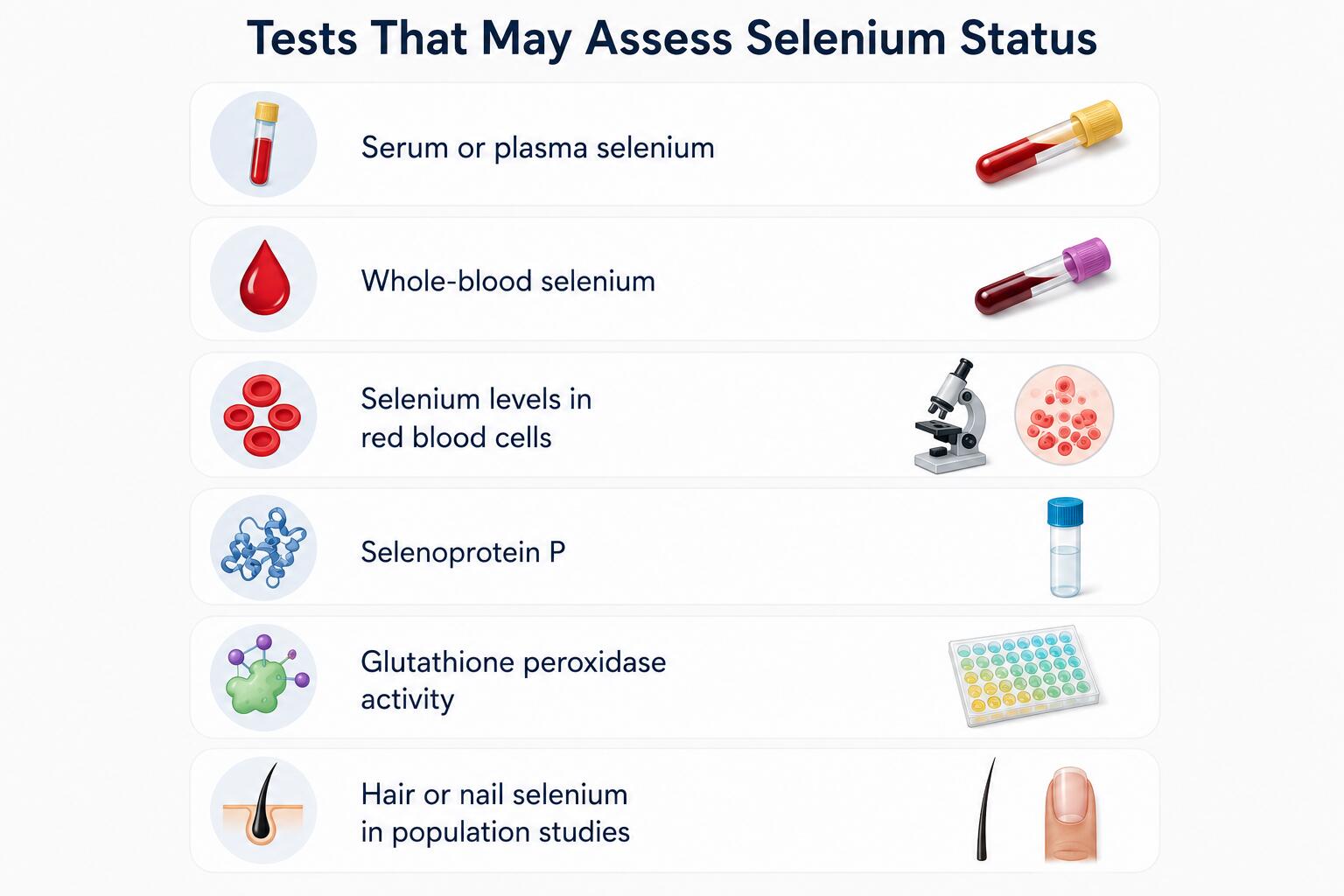
Selenium status may be assessed with one or more of the following tests:
- Serum or plasma selenium.
- Whole-blood selenium.
- Selenium levels in red blood cells.
- Selenoprotein P.
- Glutathione peroxidase activity.
- Hair or nail selenium in population studies.
We cannot emphasize enough that no single test is perfect.
How Much Selenium Do You Need for Good Health?
Selenium requirements are measured in micrograms (not milligrams). One microgram is one-thousandth of a milligram, which shows how little the body needs.
The European Food Safety Authority sets an adequate intake of 70 micrograms per day for adults. It uses the same amount during pregnancy and recommends 85 micrograms per day during breastfeeding.
The United States uses a slightly different recommended dietary allowance of 55 micrograms for adults, 60 micrograms during pregnancy, and 70 micrograms while breastfeeding.
| Life stage | European adequate intake | US recommended dietary allowance |
|---|---|---|
| Adults | 70 mcg/day | 55 mcg/day |
| Pregnancy | 70 mcg/day | 60 mcg/day |
| Breastfeeding | 85 mcg/day | 70 mcg/day |
Sources of Selenium
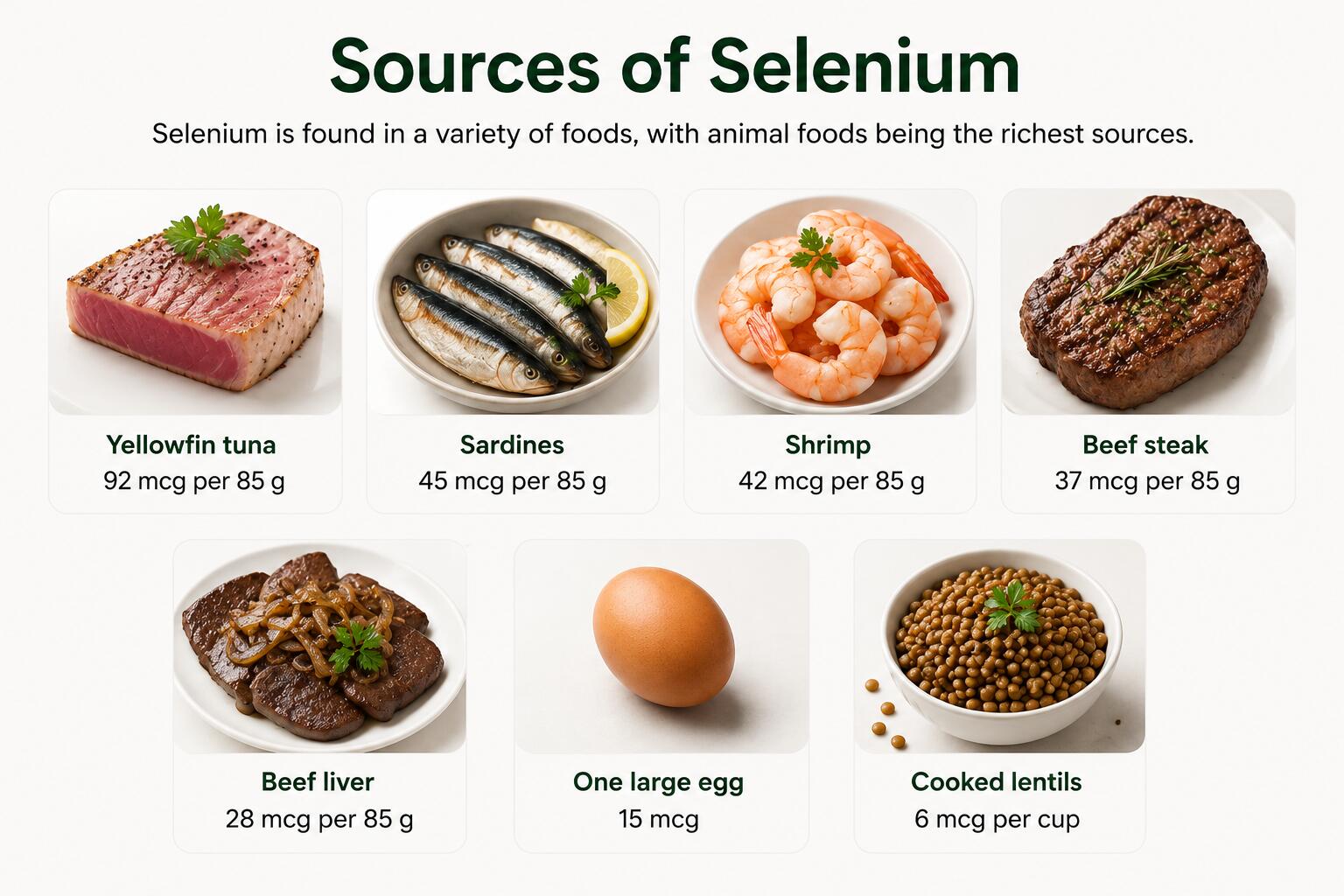
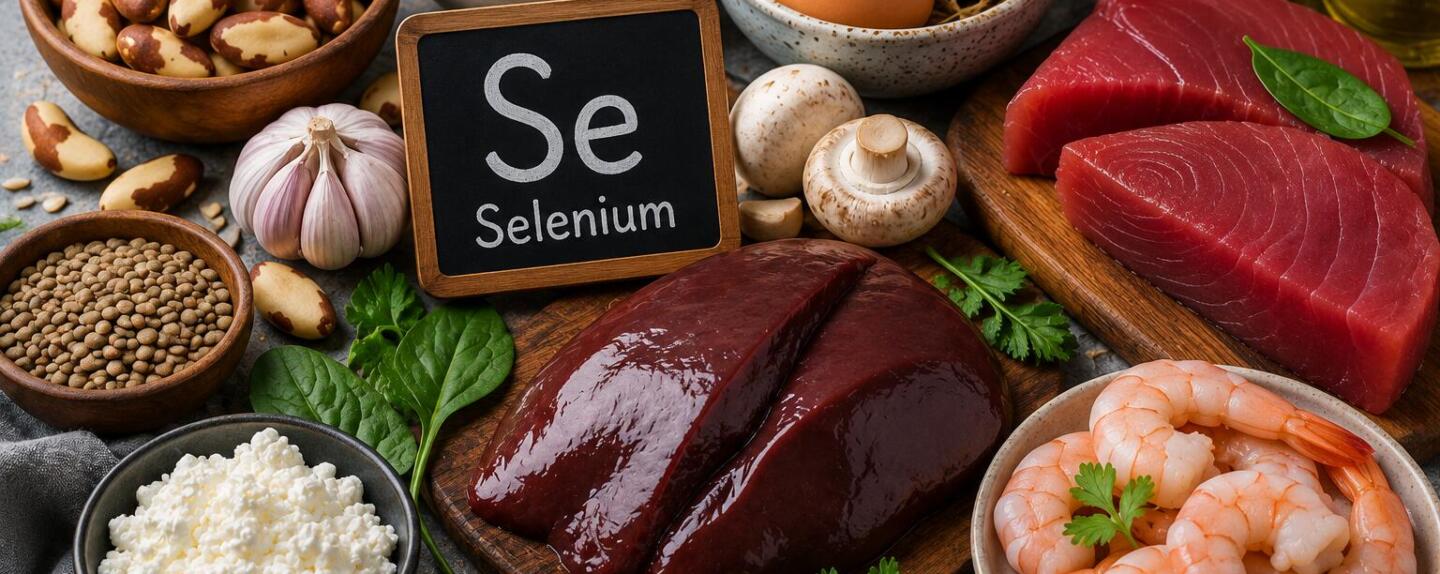
The richest food sources of selenium include Brazil nuts, seafood, meat, poultry, eggs, dairy foods, and organ meats. Grains and legumes can also contribute, but their selenium content depends greatly on soil conditions.
Approximate values listed by the NIH include:
- Yellowfin tuna: 92 mcg per 85 g
- Sardines: 45 mcg per 85 g
- Shrimp: 42 mcg per 85 g
- Beef steak: 37 mcg per 85 g
- Beef liver: 28 mcg per 85 g
- One large egg: 15 mcg
- Cooked lentils: 6 mcg per cup
Brazil nuts deserve special attention if we consider that an average 28 g serving may contain more than 500 micrograms. However, the amount varies enormously. The regular intake of Brazil nuts with dietary supplements can actually push selenium levels above the safe levels, so you need to be extra careful here.
Organ meats provide selenium alongside other naturally occurring nutrients such as vitamin B12, iron, copper, zinc, and protein.
For people who do not regularly consume selenium-rich foods, Nutriest’s Grass Fed Desiccated Beef Kidney Supplement provides freeze-dried organic beef kidney, which naturally contains selenium.

Selenium Supplements: When Do They Make Sense?
Selenium supplementation can be useful when you have inadequate intake or deficiency of selenium, especially when food intake cannot be corrected quickly, or absorption is impaired.
Common supplement forms include:
- Selenomethionine
- Selenium-enriched yeast
- Sodium selenite
- Sodium selenate
Selenomethionine is an organic form that the body absorbs well and may incorporate into proteins in place of methionine. Sodium selenite and sodium selenate are inorganic forms that follow different metabolic pathways.
With that said, absorption alone does not make one form appropriate for every person. The dose, selenium status, existing ailments, and duration are equally important.
Learn about the practical differences between isolated nutrients and food-derived products in this guide about synthetic versus whole-food supplements.
Conclusion
Selenium deficiency symptoms are usually nonspecific, and isolated selenium deficiency is uncommon in people who eat a varied diet. The factors that point towards selenium deficiency occur in people with strong risk factors, such as kidney dialysis, severe malabsorption, long-term intravenous nutrition, HIV, and poor diets.
If you’re interested in a food-based way to include selenium-containing organ meat in your routine, check out Nutriest’s Grass Fed Desiccated Beef Kidney Supplement. Make sure to read all supplement labels and keep your total selenium intake within safe limits.
Frequently Asked Questions (FAQs)
1. What are the first symptoms of selenium deficiency?
The first symptoms are generally vague and may include fatigue, muscle weakness, and reduced exercise tolerance. These symptoms are not specific to selenium deficiency, so risk factors and blood tests are more useful than isolated symptoms alone.
2. Can selenium deficiency cause hair loss?
Low selenium may contribute to hair changes, but hair loss alone does not confirm deficiency. Iron deficiency, thyroid disease, stress, genetics, medication, and excessive selenium can also cause shedding.
3. How long does selenium deficiency take to correct?
Mild deficiency may improve within weeks after adequate intake is restored, but the timeline depends on the cause and severity. Muscle, thyroid, fertility, and cardiac effects may require longer follow-up and medical treatment.
4. Can I take selenium supplements every day?
Selenium supplements can be taken daily when the dose is appropriate. Add up selenium from food, multivitamins, and Brazil nuts. You should also avoid exceeding the EFSA upper limit of 255 micrograms per day.