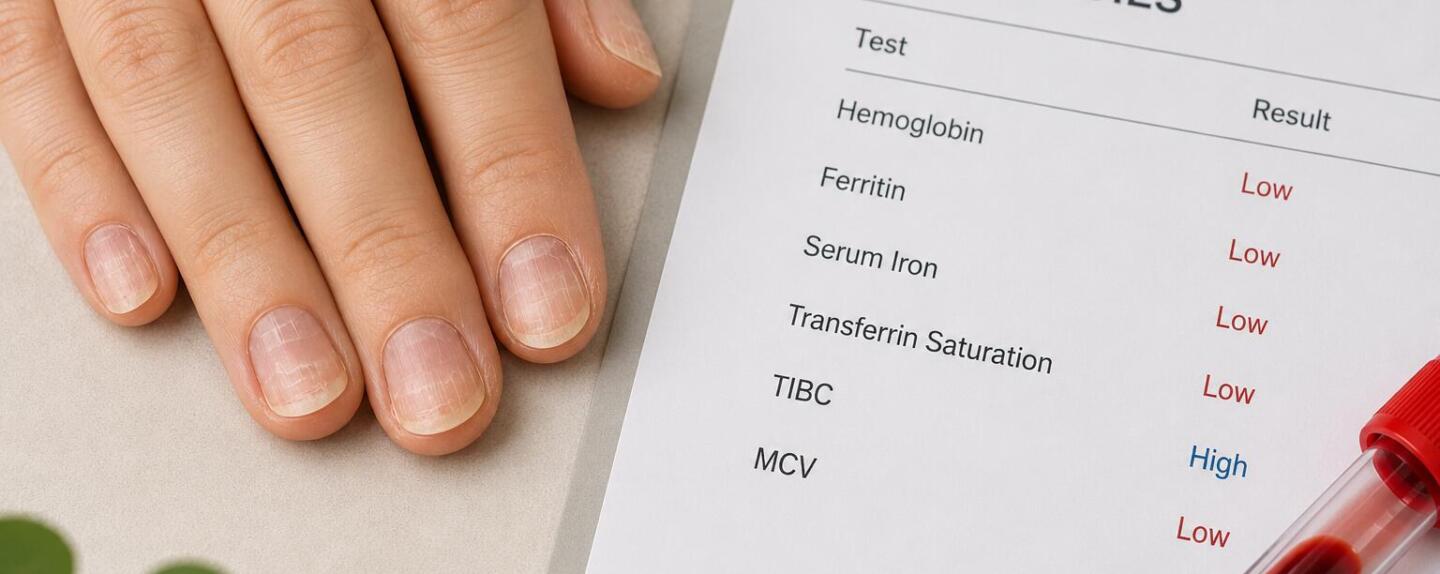
Your fingernails break, split, and peel regardless of how carefully you treat them. Although it’s reasonable to blame frequent handwashing and nail products in some cases, iron deficiency brittle nails can also be a sign that your body does not have enough iron.
Let’s look at how low iron levels affect nails, common symptoms, and how to address this issue efficiently.
At a Glance
Iron deficiency can make nails thin, fragile, and prone to splitting. Severe iron deficiency may eventually produce spoon-shaped nails (i.e., koilonychia).
Brittle nails alone cannot definitively diagnose low iron. Therefore, ferritin, hemoglobin, and a few other blood tests are indispensable to deciding on the treatment before you start iron supplements.
What Are Iron Deficiency Brittle Nails?
Brittle nails are nails that crack, peel, split, and/or break easily. The medical term for brittle nail syndrome is onychoschizia.
The nail plate is the hard part that’s visible in your nail. It is produced by the nail matrix, which is a growth area beneath the skin at the base of the nail. From there, new keratin cells push the older nail forward across the nail bed.
In chronic iron deficiency, nails become thinner, softer, and flatter. In more advanced cases, the nail's center sinks as the edges curve upwards. This creates the rounded appearance of a spoon, which is aptly named a spoon nail, spoon-shaped nail, or koilonychia.
A 2023 review that studied the relationship between koilonychia and systemic disease concluded that iron deficiency anemia is one of its classic causes. Another clinical report states that koilonychia is frequently observed with chronic iron deficiency resulting from poor nutrition, blood loss, or malabsorption. However, it’s important to remember that not every iron-deficient individual will develop spoon nails, and not every brittle nail case is caused by iron deficiency.
Let’s go over some other nail pathologies that occur in iron deficiency and other ailments:
| Nail change | How it looks | What it means |
|---|---|---|
| Brittle nails | Cracking, splitting, peeling, and breaking. | Low iron, repeated wetting and drying, chemicals, aging, thyroid disease, and nutritional deficiencies. |
| Pale nail bed | Less pink than usual. | Reduced hemoglobin levels or poor blood flow. |
| Thin nail plate | Soft, flexible, and easily damaged nails. | Iron deficiency, physical trauma, chemicals, and an underlying condition. |
| Spoon-shaped nails | Concave center with raised edges. | Chronic iron deficiency anemia. It's also seen in iron overload, thyroid disorders, autoimmune conditions, and repeated trauma. |
| Nail pitting | Small dents in the surface. | Psoriasis, eczema, and other inflammatory conditions. |
| Thick or yellow nails | Discoloration and increased thickness. | Fungal infections, trauma, and aging. |
How Does Iron Deficiency Affect Nail Health?
Iron helps your body produce hemoglobin, which is the protein inside red blood cells that transports oxygen from the lungs to your tissues. In cases of iron deficiency anemia, the body cannot make enough normal hemoglobin. As a result, fewer red blood cells are available to efficiently carry oxygen.
This means the body’s tissues receive less oxygen-rich blood. Consequently, you may experience fatigue and shortness of breath before you see nail changes.
The exact reason iron deficiency causes spoon-shaped nails is not fully understood. The best theory we have is that it’s a multifactorial process involving diminished oxygen delivery, altered blood flow to the nail bed, and low iron levels within epithelial cells. All of these factors make the nail's surface soft enough for pressure to push its center down.
Furthermore, iron is involved in the production of cellular energy, DNA synthesis, and the activity of numerous enzymes. When iron is low, your body prioritizes essential organs, so the appearance of your nails and hair may suffer.
Signs of Iron Deficiency Anemia Beyond Brittle Nails
Iron deficiency can exist long before anemia develops. In the earlier stages, iron stores fall, but hemoglobin levels may remain within the normal ranges of laboratory results. As a result, symptoms can be mild or absent altogether.
As the low levels of iron persist, you may experience the following signs and symptoms:
- Fatigue, weakness, and poor tolerance to exercise.
- Pale skin, lips, nail beds, and lower eyelids.
- Cold hands and feet.
- Headaches, dizziness, and difficulty concentrating.
- Fast breathing rate or shortness of breath during activity.
- Palpitations or chest pain in severe cases.
- Hair loss or increased hair shedding.
- Restless legs syndrome.
- A sore and swollen tongue.
- Cracks at the corners of the mouth or mouth ulcers.
- Cravings for ice, soil, paper, and other non-food items.
- Brittle nails or spoon nails.
Severe cases of iron deficiency anemia can make the heart work harder to deliver oxygen. Over time, untreated severe anemia may contribute to an enlarged heart or heart failure, particularly in people with existing heart disease. Brittle nails are, therefore, less important than the wider medical picture.
For a deeper dive into iron deficiency anemia and how to restore iron levels, check out this guide.
Who Is at Higher Risk of Low Iron Levels?
Iron deficiency occurs when iron intake or absorption cannot keep up with the amount the body uses or loses.
For example, heavy menstrual periods are among the most common risk factors in women of reproductive age. Pregnant women also need more iron because blood volume expands, and iron is required for fetal and placental development. Additionally, blood loss during delivery may contribute to postpartum iron deficiency.
Other people at higher risk include:
- Frequent blood donors.
- Endurance athletes.
- Older adults with poor diets.
- People who avoid meat.
- Anyone with a gastrointestinal condition that reduces iron absorption.
- Individuals with coeliac disease, inflammatory bowel disease, bariatric surgery, gastric ulcers, and infection with Helicobacter pylori.
- Certain medications (e.g., proton pump inhibitors).
With all of that said, unclear causes of gastrointestinal blood loss need particular attention. According to the American Gastroenterological Association guidelines, men and postmenopausal women with iron deficiency anemia generally require gastrointestinal evaluation rather than just iron treatment alone.
In other words, the root cause is more important than the number that shows up on a blood test.
Iron Supplements and Iron-Rich Foods
Treatment should accomplish two things: restore enough iron and address the underlying cause of the deficiency.
Iron-rich foods can support daily iron intake. Red meat, shellfish, poultry, liver, and other animal foods contain heme iron. Beans, lentils, tofu, spinach, nuts, and fortified cereals provide non-heme iron.
The NIH iron fact sheet explains that heme iron has greater bioavailability than non-heme iron. Vitamin C can improve the absorption of non-heme iron, so pairing lentils or leafy greens with peppers, berries, kiwi, or citrus fruits may help.
Coffee, tea, phytates, and large amounts of calcium taken with an iron-rich meal can reduce absorption. You do not need to eliminate these foods, but separating them from an iron supplement may be useful when levels are low.
Oral iron supplements are often necessary when food alone cannot replace a meaningful deficit. Traditional options include ferrous sulphate, ferrous fumarate, and ferrous gluconate. They can be effective, although nausea, constipation, abdominal discomfort, and dark stools are common reasons people struggle to continue them.
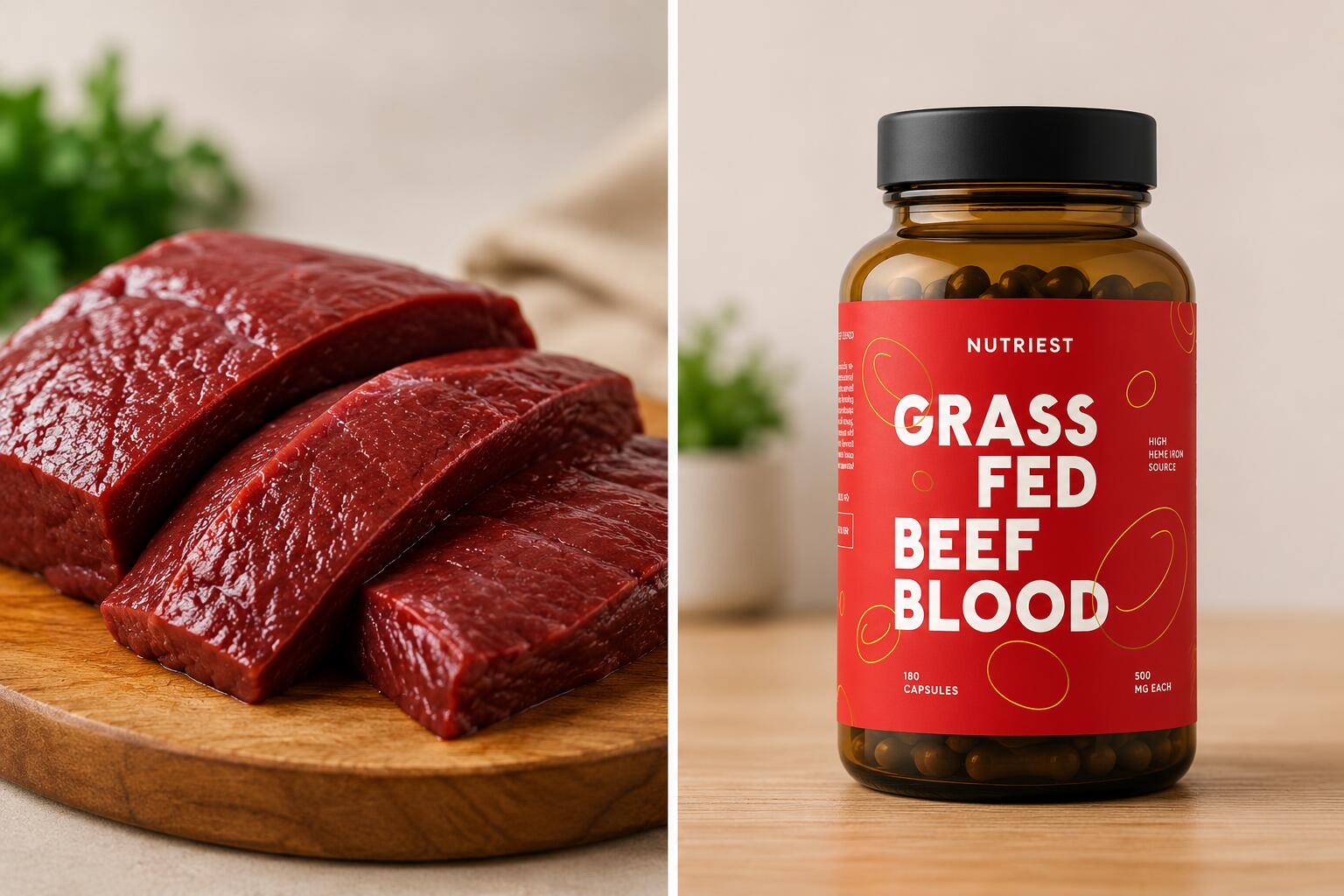
For readers seeking a food-based source of heme iron, Nutriest’s Grass Fed Desiccated Beef Blood Supplement contains 100% freeze-dried grass-fed beef blood and provides 101% of the nutrient reference value for heme iron per serving, according to the product information. It can support iron intake when deficiency has been confirmed, but it should not replace medical investigation of unexplained anemia.
Nutriest also explains the differences between dietary sources and common formulations in its guide to the best iron supplement for anemia.
Do not take high-dose iron simply because your nails break. Iron overload can also damage the body, and spoon-shaped nails have occasionally been reported in people with hemochromatosis, a condition in which excess iron accumulates.
How Long Do Brittle Nails Take to Improve?
Iron levels and symptoms do not recover at the same speed.
Energy and breathing may begin improving before the nails look different. Existing nail damage cannot repair itself because the visible nail plate is made of dead keratin. A healthy nail must grow from the nail matrix and gradually replace the damaged section.
A review of nutrition and nail disease reports that nails grow around two to three millimetres per month and may take six to nine months to replace completely. Toenails grow even more slowly.
You may therefore need several months to see a clear difference in nail strength or shape, even when treatment is working.
During that time:
- Keep nails short to reduce bending and splitting.
- Wear gloves when cleaning or washing dishes.
- Apply moisturiser to the nails and cuticles.
- Avoid frequent acetone, gel removal, and artificial nails.
- Do not use the nails as tools.
Continue treatment for the period recommended after hemoglobin recovers so iron stores can be rebuilt.
If the nails remain brittle after iron levels normalize, another cause should be considered.
When Should You See a Doctor?
You should consult your primary care physician when your nail changes are persistent, affect numerous nails, and you have other symptoms (e.g., fatigue, breathlessness, heavy periods, hair loss, restless leg, pale skin, unusual cravings).
A more urgent assessment becomes indispensable if you notice that you have black stools, unexplained weight loss, difficulty swallowing, shortness of breath, chest pain, or any neurological symptoms.
Conclusion
Iron deficiency brittle nails may begin with splitting and peeling before progressing to spoon-shaped nails in chronic iron deficiency. The connection makes biological sense because iron helps produce hemoglobin, red blood cells carry oxygen, and growing tissues need adequate nutrients and blood flow.
Still, nails shouldn’t be boiled down to a simple blood test. You first need to confirm low iron with laboratory tests, identify what’s causing your symptoms, and then restore iron through diet, supplements, and/or medical treatment.
When your results confirm that you need more iron, you can explore Grass Fed Desiccated Beef Blood Supplement as a convenient whole-food source of heme iron.
Frequently Asked Questions (FAQs)
1. Does iron deficiency cause brittle nails?
Yes, iron deficiency can cause brittle nails, especially when the deficiency is prolonged or has progressed to iron deficiency anemia. However, dryness, chemicals, repeated water exposure, thyroid disease, fungal infection, and aging can cause similar nail changes.
2. What do iron-deficiency nails look like?
Iron-deficient nails may appear thin, pale, soft, cracked, and easily broken. In severe cases, they can become spoon-shaped (a depressed center and raised outer edges).
3. Will iron supplements make my nails stronger?
Iron supplements may help when brittle nails are caused by iron deficiency, which is confirmed with blood tests. They will not improve nails that are damaged by trauma, nail products, infection, or other underlying conditions.
4. How quickly do nails recover after an iron deficiency?
You should expect visible improvement after a few months because the new nail must grow from the nail matrix. Fingernails may require up to six months or longer to grow out fully. Finally, toenails take the longest to grow.