
Bone marrow has been a firm favourite with humans since the earliest of times. Way before it was a delicacy, our forefathers used it as a practical way to stay alive. Tool-using hominids would crack open animal bones and suck out the mineral and calorie-rich marrow. Later, it was included in soups, sauces, and stews.1 Today, roasted bone marrow is still a popular dish, and bone broth is the mainstay of the healthy chef’s kitchen.
But do we only eat it because we enjoy the taste? It turns out bone marrow is nature’s nutritional powerhouse. Dense in calories, nutrients, and good fats, it delivers many benefits that people value all over the world.
In this article, we’re putting a spotlight on the humble bone marrow by discussing the benefits you’ll get from making it part of your everyday eating plan.
Quick Overview
Bone marrow is beneficial for joint health support, immune system support, gut health, and optimal brain functioning. Rich in collagen, glucosamine, chondroitin, and omega-3 fatty acids, bone marrow has a protective and hematopoietic function (production of red blood cells).
Table of Contents
- What is bone marrow?
- Joint health
- Digestive and gut lining support
- Energy and metabolic support
- Anti-inflammatory and immune system support
- Healthy skin
- Conclusion
- FAQs: Bone marrow benefits
What is bone marrow?
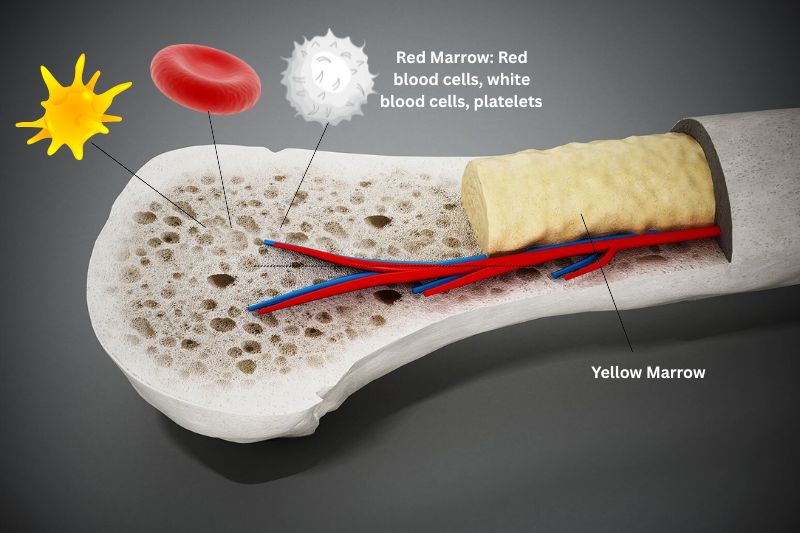
Bone marrow is the soft, spongy tissue found in the centre of bones. It is filled with blood vessels and comprises two main parts: Red marrow and yellow marrow. Red marrow contains stem cells that develop into red blood cells, as well as white blood cells and platelets. Yellow marrow is mainly fat and contains stem cells that become cartilage, fat or bone cells. When people roast marrow, they consume mostly the yellow marrow. The femur and shank bones from a beef cow are commonly used for roasting.
Bone marrow plays a vital role in your body. As your body’s ‘blood factory’, it could be said that bone marrow is keeping you alive. Red blood cells carry oxygen around the body, while white blood cells fight infection. Without platelets, your blood doesn’t clot, and you can’t stop bleeding.
Bone marrow nutrition
The reason our ancestors prized bone marrow is its nutritional profile. They may not have phrased it that way, but they understood its value. For them, it was much more than a tasty snack; it was a lifeline. Here’s why.
- High caloric value: Fat provides more than twice the dietary energy of protein or carbohydrates. This makes it a highly efficient way to keep energy levels up.
- Essential nutrients: Bone marrow is rich in essential nutrients, including healthy fats, collagen, Vit A and K2, and minerals. These nutrients are vital for a healthy and strong body.
- Bioactive compounds: Collagen, conjugated linoleic acid (CLA), glycine, glucosamine. These small but mighty molecules help with body repair and regulate body systems.
This rich nutritional profile explains why bone marrow keeps coming up in discussions about whole-body wellness. But that brings us to the real question: What benefits are you hoping to get from eating bone marrow?
Ready to experience the full benefits of bone marrow?
Roasted bone marrow varies in quality and taste depending on the animal it comes from and how it’s prepared. With bone marrow supplementation, you get the same daily dosage, supporting well-being and health goals. Try Grass Fed Bone and Marrow from Nutriest. In their original whole food form, these supplements are highly bioavailable.
Bone marrow health benefits: What science and tradition suggest
1. Joint health

Bone marrow contains the compounds collagen, glucosamine, chondroitin, and glycine. These compounds build healthy cartilage, which is essential for strong joints. Cartilage is the cushioning tissue that prevents bones from grinding on one another. When this happens, joint pain is common and ongoing.
When you consume bone marrow, the collagen breaks down into glycine and proline. These amino acids act as the building blocks for healthy connective tissue. Marrow also naturally contains glucosamine and chondroitin, which are found in joint health supplements. These molecules help your cartilage stay supple and ready to absorb impact.
Pair bone marrow with hydrolyzed collagen peptides (extra dose of collagen), and omega-3 (reduces chronic inflammation), for an all-round joint health program.
Further reading: What is grass-fed collagen?
2. Digestive and gut-lining support

The gut lining is composed of delicate tissue that requires constant maintenance. The modern diet, consisting mainly of processed foods, can make this lining semi-permeable, allowing food to leak into the bloodstream. This is commonly known as leaky gut syndrome.
Leaky gut syndrome symptoms include bloating, gas, abdominal pain, diarrhea, fatigue, and skin problems. For some people, these symptoms affect their daily functioning. One solution lies with cooking bones and marrow to form a substance known as gelatin. This helps strengthen the stomach lining, easing symptoms.2
Another alternative is bone broth. To extract bone marrow, simmer bones in liquid for up to 24 hours. As the bones soften and break down, the marrow seeps into the liquid, providing a rich base for soups and broths. This liquid supports gut barrier repair when used as part of a balanced diet.3
Add bone marrow to marine collagen peptides (extra collagen), probiotics, and digestive enzymes for optimal gut health. For a probiotic complex that delivers 12 strains of friendly bacteria to your gut, try Nutriest’s Advanced Probiotic Complex.
3. Energy and metabolic support

Bone marrow is calorie-dense for a good reason. Bone marrow is 97% fat tissue, which means it contains more than twice the energy of carbs or protein. For our ancestors, this meant survival, but for modern bodies, it means steady, slow-burning energy without the sharp spikes that give you the 3 pm slump.
Iron and B12 in marrow support red blood cell production. Red blood cells are responsible for delivering oxygen to all your cells using a protein called hemoglobin.4 When oxygen supply is adequate, you are full of energy, can think more clearly, and recover well from injury.
If you struggle with energy dips, fatigue, or poor recovery, a marrow supplement can provide a much-needed lift.
For maximum energy production, combine a grass-fed bone marrow supplement with a whole foods Ultimate Organ Complex. Traditional people, such as Native Americans, believe that eating organs from a healthy animal strengthens the corresponding organ in human beings. Ultimate Complex contains freeze-dried organic beef liver, kidney, heart, pancreas, spleen, and lungs, helping restore vitality to your body.
4. Anti-inflammatory and immune system support

Inflammation is the immune system’s natural response to injury or infection. It is designed to heal damaged tissue and fight off invaders. While acute in nature, our modern lifestyle can create chronic inflammation in the body, damaging healthy tissues and organs.5
Bone marrow contains compounds that help to keep chronic inflammation at bay. CLA (conjugated linoleic acid) interacts with immune cells and inflammatory pathways, toning down excessive inflammatory responses. Glycine has a calming effect on the immune system by reducing oxidative stress.
If your body feels chronically stressed, inflamed, and run-down, the combination of fats and minerals in bone marrow can offer support. Combine bone marrow with omega-3 (powerful anti-inflammatory) and grass-fed colostrum extract to calm down inflammatory reactions. People who suffer from gut-related inflammation will find colostrum helpful for fighting infection in the digestive tract.
5. Healthy skin

Your skin is constantly renewing itself. For most adults, the cycle takes between 28-42 days. To do this properly, your body needs a healthy dose of the right nutrients (including fatty acids and collagen). Fortunately, bone marrow provides collagen, glycine, omega-3, and Vitamin A. Here’s how each one plays a role in healthy skin:
- Collagen: When you consume bone marrow, the body breaks it down into amino acids that produce collagen. More collagen means stronger, firmer, and more supple skin.
- Glycine: Glycine is one of the main collagen-forming amino acids. It reduces inflammation and can reduce redness and irritation.
- Omega-3 fatty acids: Fatty acids strengthen the lipid barrier, keeping moisture inside the skin. This makes it look plumper and less prone to flakiness or dryness.
- Vitamin A: Supports orderly cell turnover. This means old cells shed when they should, and new ones push through, giving you a brighter and healthier look.
Get the optimal dose of nutrients for skin health, with a bone marrow supplement. As your skin renews month after month, you’ll notice your skin change, repair, and restore. Try Nutriest’s Grass Fed Bone and Marrow supplement.
Conclusion
Bone Marrow is nature’s very own nutritional powerhouse. Whether it’s roasted or simmered slowly from beef shank, neck bones, or femur bones, it delivers a concentrated package of nutrients that your body relies on for health and vitality.
While eating bone marrow as a whole food is a fantastic choice, it’s not always practical and doesn’t deliver the same consistency as supplementation. It is by far the easiest way to get all the benefits of bone marrow, without needing to consume large quantities of the natural food. If you want to see results from eating bone marrow, supplementation is the way to go.
If you want the full spectrum of nutrients without the sourcing and preparing of bones, Nutriest has you covered. Our range is designed to deliver the same whole food nourishment in a modern, concentrated form.
Explore these nutrient-dense options:
FAQs: Bone marrow benefits
1. Is eating bone marrow good for you?
Bone marrow is a highly nutritious food that offers significant health benefits. It is particularly good for joints, the gut, and the immune system when consumed regularly (1-2 times a week). People with certain conditions, such as heart disease, gout, or kidney stones, should exercise caution when consuming bone marrow.
2. How often can you eat bone marrow?
For actual cooked bone marrow (scooped out of a roasted bone), 1-2 times a week is a good starting point. One serving of bone marrow is roughly between 25-50g. Since bone marrow is around 97% fat, consuming bone marrow more than 1-2 times a week will increase calorie intake.
3. What are the disadvantages of eating bone marrow?
While bone marrow is very nutrient-dense, it can hold risks for certain members of the population. Unless it is consumed as part of a balanced diet, eating too much bone marrow can aggravate cardiovascular disease (mainly related to high cholesterol). Animal products contain purines, which break down into uric acid. So for people with gout, eating bone marrow can trigger a flare-up.
4. Is bone marrow supplementation better than eating cooked bone marrow?
This depends entirely on the goals of the user. Cooked bone marrow is the whole foods version. You’ll get natural fats, collagen, and micronutrients. However, nutrient levels depend on the health of the animal, portion size, and cooking method. With supplementation, the bone marrow is freeze-dried, making it more concentrated and shelf-stable. This provides greater dosage consistency.
References: